LinkedIn is one of the most valuable channels for B2B sales. It gives you direct access to decision-makers, potential customers, and people who might genuinely benefit from your product.
But there's a concern that comes up whenever a sales team decides to scale its outreach:
What if LinkedIn restricts our account?
It's a reasonable concern. Your LinkedIn profile isn't just another sales tool. It's your professional identity, your network, and often years of relationship-building.
The challenge is finding a balance between generating new opportunities and protecting that asset.
And the answer isn't simply sending fewer messages.
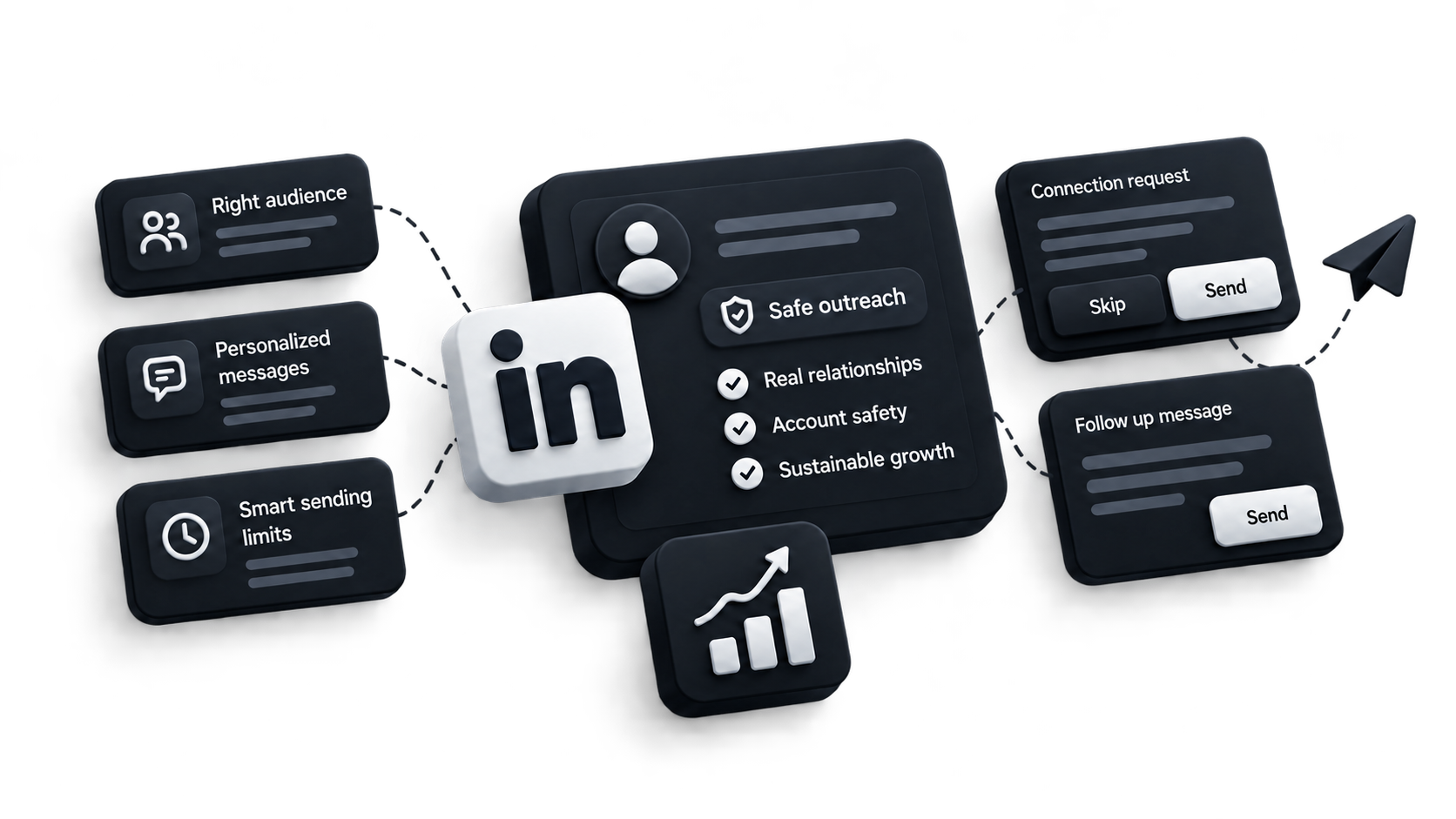
Safe LinkedIn outreach starts with reaching the right people, communicating with purpose, and understanding the platform's rules.
We recommend the following steps that may help you build a more sustainable approach.
1. Understand Why LinkedIn Restricts Accounts
LinkedIn doesn't prohibit professional networking or contacting potential business connections. But it does restrict behavior that can negatively affect other members.
According to LinkedIn's official guidance, invitation restrictions can result from:
- Sending too many connection requests within a short period.
- Having many invitations ignored or left pending.
- Receiving spam reports from recipients.
- Using prohibited automation tools.
The important detail is that restrictions aren't solely about volume. How recipients react to your invitations also matters.
Is there a safe daily invitation limit?
LinkedIn doesn't publish an exact daily invitation limit that guarantees account safety. However, there are some practical guidelines that can help you get started.
Based on common industry recommendations and our expertise, here's what we suggest:
- New or recently inactive accounts: Start with 5–10 connection requests per day and gradually build up your activity.
- Established, active accounts: Aim for 15–20 requests per working day, or approximately 75–100 per week. Some well-established accounts may support higher volumes.
These are recommended starting points, not official LinkedIn limits. Your ideal outreach volume depends on your account's history, activity, and how people respond to your invitations. Daily limits also don't override LinkedIn's rules on automation.
Our advice? Start at a comfortable pace, focus on relevant prospects, and increase your outreach gradually. After all, meaningful conversations matter more than the number of invitations you send.
2. Target the Right People Before Reaching Out
One of the easiest ways to improve outbound is to become more selective.
LinkedIn warns that recipients may ignore invitations from strangers or report them as spam.
That makes targeting important not only for sales performance, but also for reducing unwanted outreach.
So you should start by defining your ideal customer profile:
- Which roles are relevant to your solution?
- What industries and company types do you serve?
- What company sizes are the best fit?
- What problems does your product help solve?
Then look beyond job titles.
Professional context can help you understand why someone might be interested in connecting.
For example, a sales leader publicly discussing challenges with prospecting may have a clearer reason to engage with a company offering sales productivity solutions.
That doesn't mean every relevant person wants a sales pitch. But it gives you a more thoughtful starting point.
Having someone's contact information isn't the same as having a good reason to contact them.
3. Write Messages People Actually Want to Receive
Personalization is often treated as a technical task: insert a first name, job title, and company into a template.
But that doesn't necessarily make a message relevant.
Before reaching out, ask yourself:
- Why might this person care about our solution?
- What professional challenge could we help address?
- Is there a genuine reason to start this conversation now?
Your message should reflect those answers.
4. Don't turn connection requests into sales pitches
A connection request should establish a professional reason to connect, not deliver your entire product pitch.
For example:
“Hi Sarah, I enjoyed your recent discussion about building outbound sales teams. Would be great to connect.”
Once someone accepts, keep the conversation relevant. An accepted invitation doesn't mean they're interested in receiving a long sequence of promotional messages.
And if someone says they're not interested, respect that decision.
Good outreach should feel like the beginning of a useful professional conversation, not an obligation to respond.
5. Don't Rely Only on Connection Requests
Finding a promising prospect doesn't mean you need to send an invitation immediately.
You can follow someone, engage with relevant posts, participate in professional groups, or use available messaging features such as InMail.
Imagine identifying a Head of Sales who regularly shares insights about outbound prospecting.
Instead of immediately sending a generic pitch, you could follow their content and contribute to a discussion where you have something useful to add. That creates an opportunity for a more natural interaction.
But there's a difference between genuine engagement and leaving generic comments simply to attract attention. The goal isn't to manufacture familiarity. It's to establish a meaningful professional connection. Sometimes the best first outreach action isn't a message at all.
6. Understand the Risks of LinkedIn Automation
Automation is attractive because prospecting takes time.
Researching contacts, organizing leads, preparing messages, and managing follow-ups can consume hours every week.
But not every form of automation is safe and permitted on LinkedIn.
The platform explicitly prohibits unauthorized third-party tools that scrape its website or automate actions such as sending connection requests and messages.
Some tools claim to be safe because they limit activity, introduce delays, or imitate human behavior. Those features don't establish compliance with LinkedIn's policies.
A prohibited action doesn't become permitted simply because it's performed more slowly.
7. Build a Controlled Outreach Process
Scaling outbound shouldn't mean losing control over your prospecting.
A sustainable process should help you decide whom to approach, how to communicate, and when to stop.
Consider three stages.
Before outreach: Review whether prospects match your target customer profile and whether there's a meaningful professional reason to contact them.
During outreach: Choose an appropriate way to connect, keep messages relevant, and avoid repetitive promotional communication.
After outreach: Pay attention to responses. If invitations are frequently ignored, reconsider your targeting. If someone declines your offer, respect their decision.
The objective is to build a process that responds to feedback instead of sending the same messages regardless of the outcome.
This also makes your sales efforts easier to evaluate.
Rather than measuring success only by the number of invitations sent, look at whether you're creating relevant connections and worthwhile conversations.
The goal is controlled, intentional outreach — not maximum activity.
Final Thoughts: Scale Relevance Before Volume
LinkedIn outreach works best when the people you're contacting have a genuine reason to engage.
That means choosing your audience carefully, understanding professional context, communicating clearly, and respecting the platform's rules.
It also means approaching automation thoughtfully.
Automation can help organize and scale parts of a sales process, but it cannot guarantee account safety or make prohibited LinkedIn actions compliant.
Instead of asking how many people you can contact, ask:
“How can we consistently identify the right people and create conversations worth having?”
Build your outreach strategy around that question.
Because sustainable outbound isn't about pushing more messages through LinkedIn.
It's about making every outreach decision more intentional.