You published a LinkedIn post. It reached thousands of people, generated dozens of reactions, and brought a few new followers to your profile.
That's encouraging.
But here's a more interesting question: Did any of that attention turn into a conversation with a potential customer?
For many B2B founders, LinkedIn content and sales prospecting are two separate activities.
You publish posts to build your personal brand. Meanwhile, you search for prospects, send connection requests, and follow up with potential customers.
Both activities can be valuable. But when they operate independently, you miss an opportunity to make them work together.
Your content can help the right people discover your expertise. Their professional activity can provide clues about what matters to them. And relevant outbound can turn those insights into conversations.
The opportunity is to connect these activities into one repeatable process.
The Gap Between Attention and Pipeline
Let's imagine you're a founder building a B2B SaaS product.
You've been posting on LinkedIn for several months. Your network is growing, people recognize your name, and some of your posts receive meaningful engagement.
Still, most of your sales meetings come from manual prospecting.
Why?
Because visibility and buying interest are not the same thing.
Someone might enjoy your post without having any need for your product. Another person might rarely interact with your content but work at a company that is actively looking for a solution like yours.
That's why engagement numbers alone don't tell you much about potential sales opportunities.
A post with 50 reactions from relevant decision-makers could be more valuable to your business than a post with 5,000 reactions from people outside your target market.
The goal isn't to stop caring about reach.
It's to understand who you're reaching, what problems they face, and whether there is a meaningful opportunity to start a conversation.
This requires connecting your content strategy with your Ideal Customer Profile (ICP).
Your LinkedIn Profile Is Part of the Buying Journey
Before someone replies to your message, books a demo, or considers your product, they may visit your LinkedIn profile.
What they find there can influence their impression of you.
A founder's profile should make three things clear:
- What the company does and whom it helps.
- Which problems the founder understands.
- Why someone should trust their experience.
Your headline, About section, banner, and featured content should work together to communicate that value.
For example, compare these two headlines:
Founder & CEO at ExampleTech
And:
Helping B2B SaaS teams generate more qualified sales conversations
The second headline gives visitors a clearer idea of what the founder works on and whom they serve.
You can also use your Featured section to highlight a practical guide, a useful case study, or a product demonstration.
The important thing is consistency.
If someone discovers you through a post about outbound sales, visits your profile, and then explores your website, the message should feel connected.
They should understand what your company does without having to figure it out themselves.
Create Content Around the Problems Your Customers Actually Have
A successful content strategy doesn't require publishing every day or chasing every trending topic.
It starts with understanding your audience.
Imagine your ideal customers are founders of small B2B SaaS companies who already handle sales themselves.
What questions might they be asking?
Perhaps they're wondering when to hire their first SDR, why their cold outreach isn't generating replies, or how to find better prospects without spending hours researching LinkedIn.
Those questions are potential content topics.
Rather than writing broadly about entrepreneurship, you could publish an article about what to prepare before hiring your first salesperson.
Instead of another generic AI productivity post, you could explain how to recognize companies that might actually need your product.
This creates a natural connection between your expertise and the problems your potential customers are trying to solve.
Think beyond promotional posts
Not every piece of content needs to mention your product.
A useful content mix can include practical guides, lessons from your experience, observations about your industry, and examples of common mistakes.
For instance, a founder building an outbound automation product might share:
Practical content: How to identify buying signals before contacting a prospect.
Experience-based content: What changed after interviewing founders about their sales process.
Product-related content: How a lead-scoring workflow helps prioritize potential customers.
The first two build understanding and trust. The third introduces a potential solution.
Over time, these topics can help you become associated with problems your product is designed to address.
And importantly, your sales conversations can become a source of future content.
When several prospects ask the same question, consider writing about it.
When someone describes a problem in an unexpected way, pay attention to their language.
Good content doesn't need to come from a separate marketing brainstorming session. It can grow directly from what you're learning about your customers.
Buying Signals Connect Content With Outbound
This is where content and prospecting start to become more interesting together.
Traditional outbound often begins with a list of people who match certain criteria.
For example:
Find Heads of Sales at B2B SaaS companies with 10–50 employees.
That's a reasonable starting point. But it tells you relatively little about why those people might need your solution right now.
A more contextual approach looks for signals.
Buying signals are observable events or behaviors that suggest a person or company may be entering a situation where your product could become relevant.
Consider a few examples.
A company has started hiring SDRs. Its sales process may be expanding.
A founder publishes a post about struggling to manage prospecting alongside product development.
A sales leader discusses challenges with finding qualified leads.
A business announces expansion into a new market, potentially creating a need for new customer acquisition.
None of these events proves that someone wants to buy your product.
But each provides context that a job title alone cannot offer.
Not every engagement is a buying signal
Someone liking a post about AI doesn't necessarily mean they're shopping for AI software.
And someone visiting your website isn't automatically a qualified lead.
It's important to distinguish between different kinds of information.
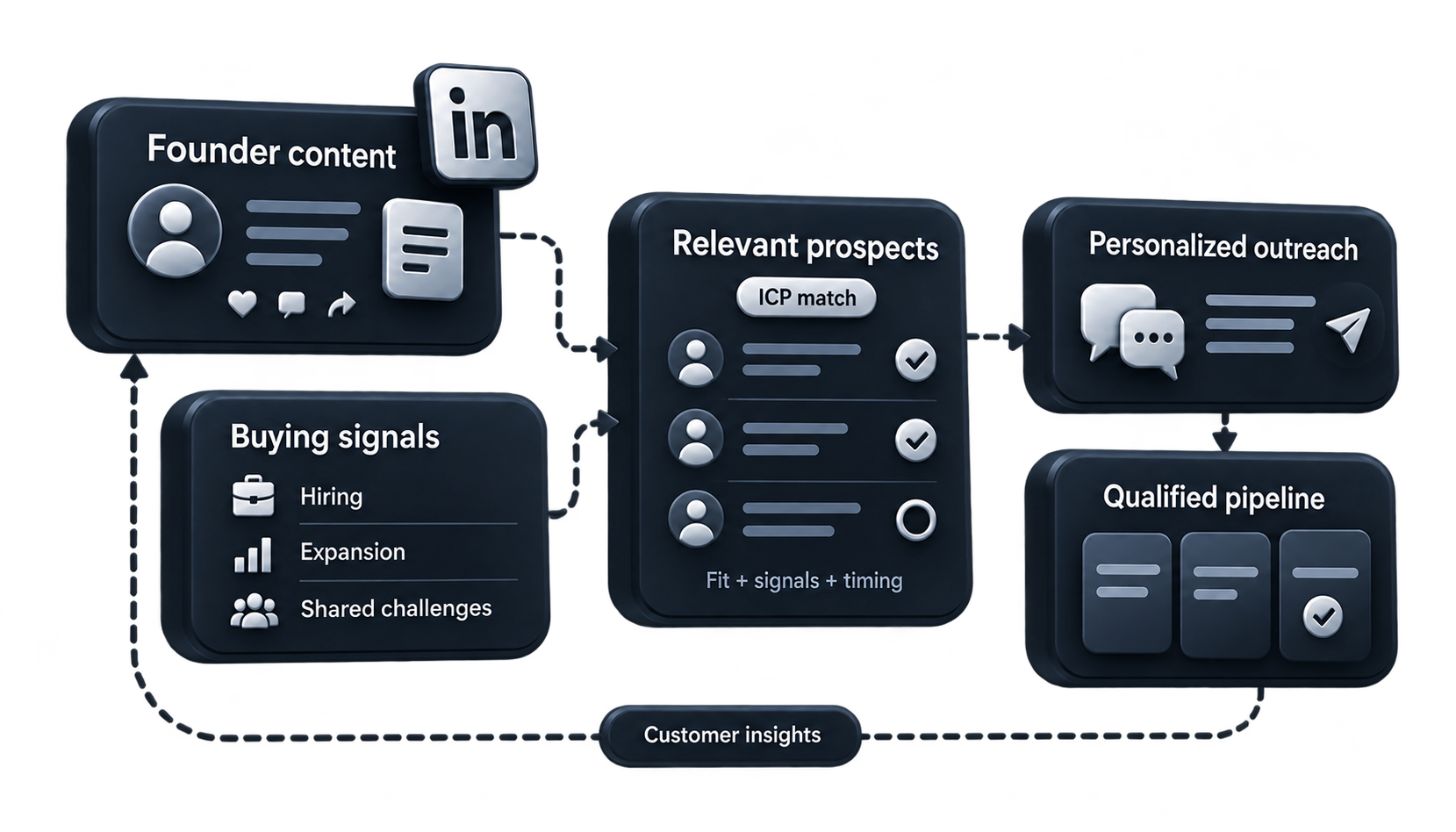
Customer fit: Does this person work at a company that could genuinely benefit from your solution?
Relevant activity: Have they publicly discussed or demonstrated something related to the problem you solve?
Timing: Is there a recent event that makes the problem more relevant now?
When these factors overlap, you have a stronger basis for deciding whether someone deserves closer attention.
There's also a practical limitation: social platforms and website analytics don't automatically reveal the identities of everyone interacting with your content. Some activity can be observed publicly, while other information is available only in aggregate or through voluntary identification.
A useful GTM process works with information that is actually available and handles personal data appropriately.
What Happens After You Identify a Relevant Prospect?
Finding a potentially interested person is only the beginning.
The next challenge is deciding whether to contact them and what to say.
Let's take a practical example.
You're building a solution that helps B2B founders automate parts of their outbound sales.
You identify a founder who runs a 12-person SaaS company. They've recently shared that they're hiring their first SDR.
This company matches your target customer profile, and the hiring announcement suggests that scaling sales is becoming a priority.
Instead of sending a generic product introduction, you can use that context to start a more relevant conversation.
For example:
"Hi Maya, noticed you're building out your sales team. Curious how you're approaching prospect research as you prepare for your first SDR. Is that still something you're handling yourself?"
Notice what's different.
The message doesn't pretend you've known this person for years. It doesn't manufacture urgency or immediately claim your product will solve every problem.
It simply acknowledges relevant professional context and opens a conversation.
If the founder responds and describes a challenge your product can help address, you have a reason to continue.
If they aren't interested, respect that response.
The purpose of signal-based outreach isn't to make every message feel artificially familiar. It's to make better decisions about whom to contact and why.
Where automation becomes useful
Researching prospects, comparing signals, organizing leads, preparing messages, and managing follow-ups can take significant time.
Automation can help make these activities more repeatable.
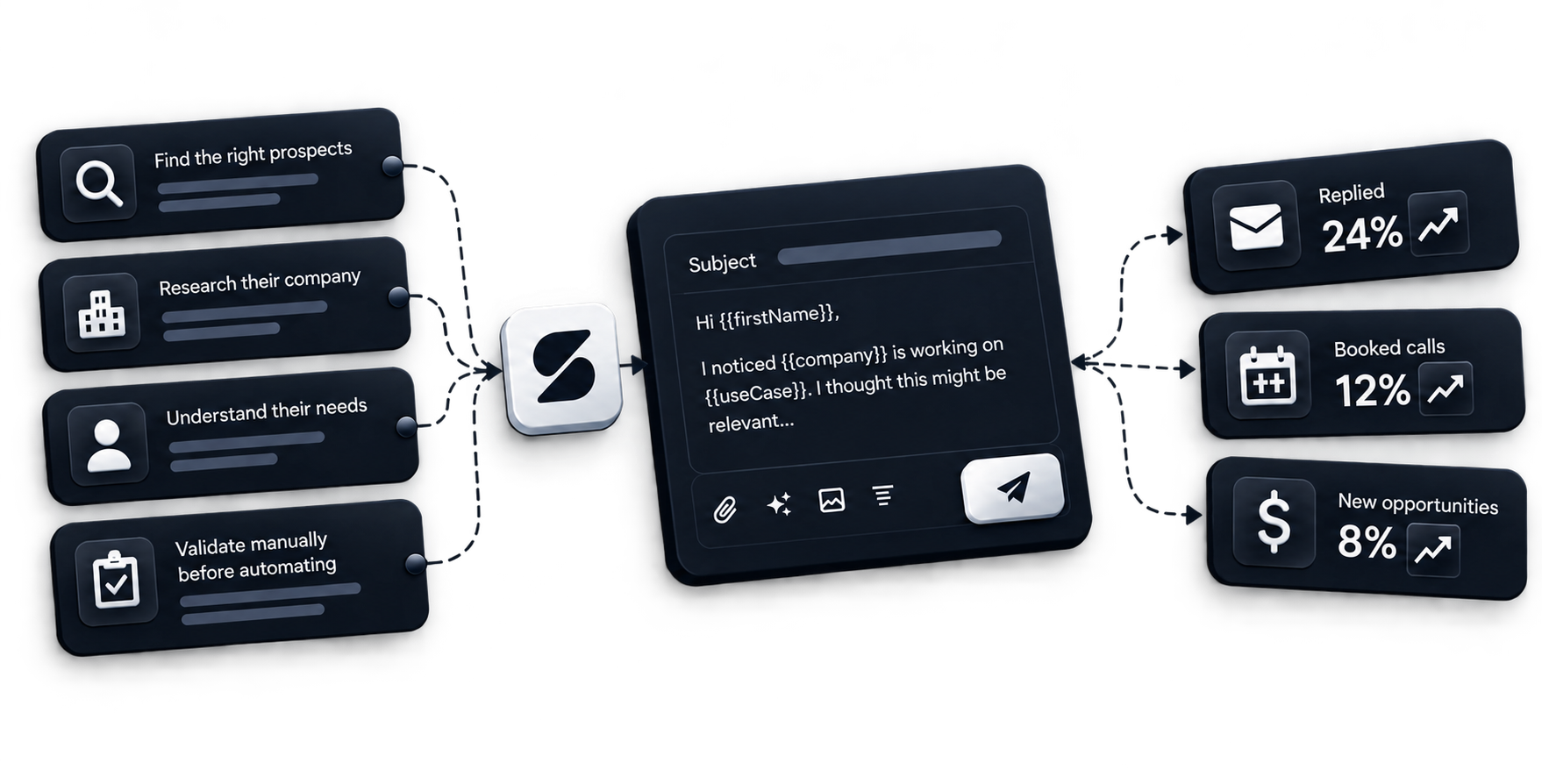
For example, Sequently is designed to find potential customers based on their fit with your ICP and available buying signals, then rank them by relevance.
It also supports reviewing prospects and messages, building LinkedIn outreach sequences, and pausing follow-ups when a prospect replies.
This connects two important activities: deciding who deserves attention and managing a structured communication process.
However, automation doesn't replace the need for thoughtful targeting.
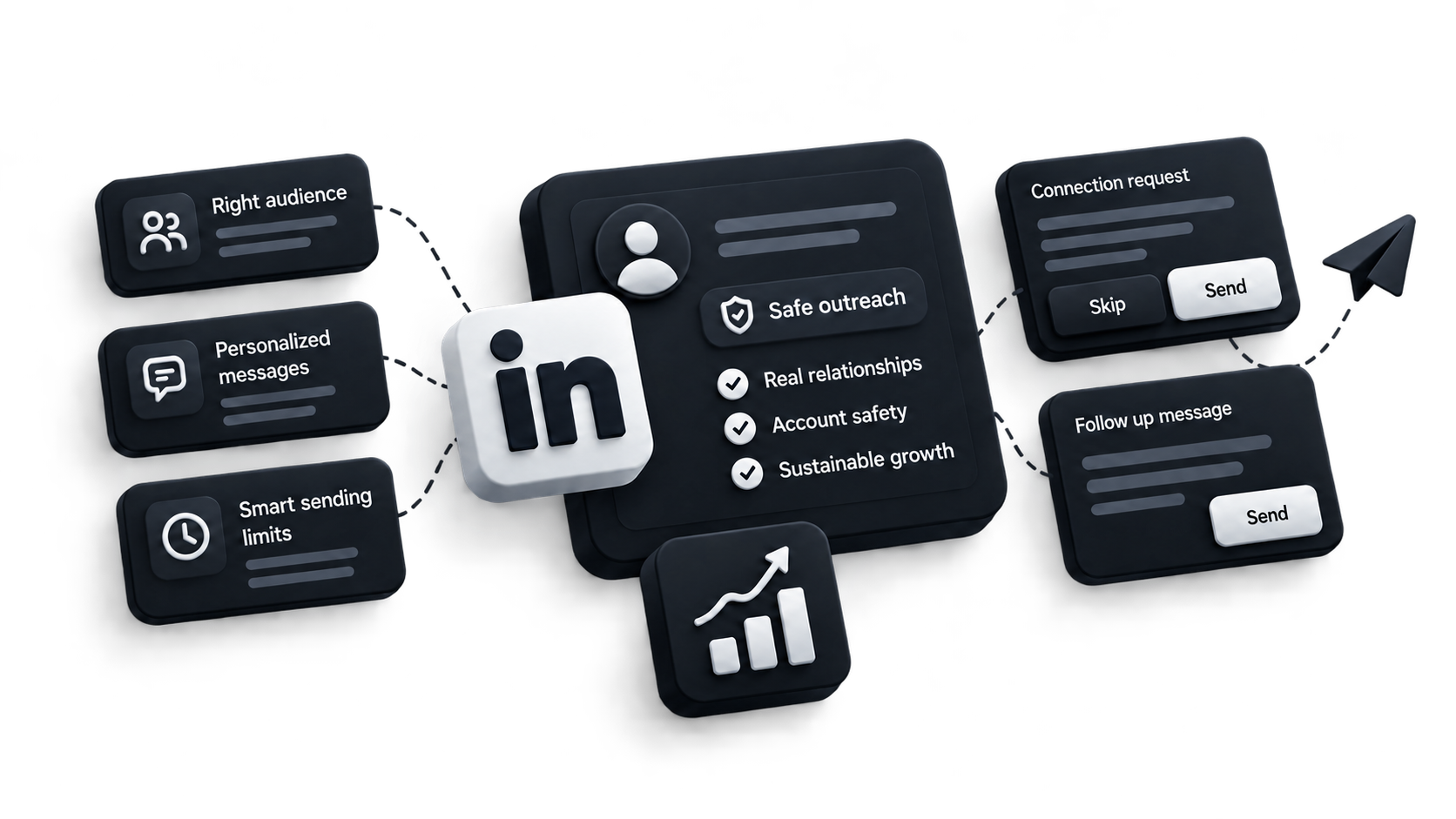
And because LinkedIn restricts unauthorized third-party automation, any outreach workflow also needs to account for the platform's rules. We discuss those considerations in more detail in our Safe LinkedIn Outreach guide.
Measure What Moves Prospects Forward
Once content and outbound become connected, measurement needs to evolve too.
Follower growth and post impressions still matter. They can tell you whether your content is reaching people.
But they don't tell you whether you're generating relevant sales opportunities.
A more useful way to evaluate your system is to look at how people move from attention to conversation and, eventually, to a sales opportunity.
Consider these questions.
Are you attracting the right audience?
Review who engages with your content when that information is available.
Are they founders, sales leaders, or other people who match your target customer profile?
Are the questions and discussions connected to problems your product addresses?
A smaller, highly relevant audience may be more useful than a much larger audience with little connection to your business.
Does your content create meaningful interest?
Look at qualified website visits, inbound inquiries, demo requests, and other interactions that indicate someone wants to learn more.
Use appropriate tracking and attribution methods rather than assuming every new lead came from a particular post.
Does your outreach generate useful conversations?
Track positive replies, qualified meetings, and opportunities created.
Don't confuse a connection acceptance with buying intent or a booked meeting with revenue.
For example, a campaign that produces 20 replies but no relevant conversations may be less valuable than one that produces five replies from companies that closely match your ICP.
The goal is to learn which combinations of audience, content, signals, and messaging lead to better outcomes.
Build a Feedback Loop, Not Two Separate Strategies
The most valuable part of connecting content and outbound is what happens over time.
Imagine a founder publishing a practical guide about improving outbound sales.
A few relevant decision-makers discover the content. Meanwhile, the team identifies companies showing signals related to sales expansion.
The team researches those companies and starts appropriate, personalized conversations.
During those conversations, prospects explain what makes outbound difficult for them.
Those insights reveal new topics worth discussing publicly.
The founder writes about those problems, reaches more relevant people, and continues learning from the responses.
Content informs prospecting. Prospecting generates customer conversations. Those conversations make the next round of content more useful.
That's the feedback loop.
It doesn't require building an enormous technology stack before you've spoken to your first customer.
A founder can begin with a well-defined ICP, a useful LinkedIn profile, consistent content, careful prospect research, and a simple system for tracking conversations.
As the process becomes clearer, tools can help organize and scale the repeatable parts.
But the underlying logic should remain the same: understand your audience, recognize relevant context, and create conversations worth having.
Final Thoughts: Turn Attention Into Opportunity
LinkedIn can be more than a place to publish content or send connection requests.
For B2B founders, it can become part of a connected approach to understanding potential customers and building a sales pipeline.
Your content communicates what you know. Your network helps you discover relevant people. Buying signals provide context about when your solution might matter.
And thoughtful outbound helps turn that context into a professional conversation.
Not everyone who reads your posts is a prospect. Not everyone who matches your ICP is ready to buy.
The opportunity lies in understanding the difference.
When content and outbound work together, you're no longer optimizing two separate activities.
You're building a repeatable process for finding the right people, understanding their needs, and starting conversations at a more relevant moment.
That's a more useful goal than collecting likes alone.