You spend hours researching prospects, building a contact list, and writing personalized emails.
Then you send 200 emails and receive seven replies.
Is that good or bad?
A 3.5% reply rate might seem disappointing, especially when other companies talk about achieving double-digit results.
But here's the problem: a high reply rate doesn't necessarily mean a successful outbound campaign.
Not every reply represents genuine interest. And not every company measures response rates the same way.
Let's look at what recent research tells us about cold email performance and how B2B teams can improve their results.
What Is a Good Cold Email Reply Rate in 2026?
Your cold email reply rate measures how many recipients respond to your outreach.
The basic calculation is:
Reply Rate = (Replies ÷ Emails Sent) × 100
However, some platforms calculate replies per individual email, while others measure how many prospects respond across an entire sequence.
That distinction matters when comparing benchmarks.
According to Hunter's State of Email Outreach 2026, which analyzed 31 million emails sent in 2025, the average cold email sequence achieved a 4.5% reply rate.
The results varied by campaign type:
- 3% for sales-focused sequences.
- 6.2% for marketing-focused sequences.
Another study, Instantly's 2026 Cold Email Benchmark Report, found:
- 3.43% average reply rate.
- 5.5%+ among the top 25% of campaigns.
- 10.7%+ among its highest-performing campaigns.
These figures come from different datasets and methodologies, so they shouldn't be treated as directly interchangeable.
Still, they offer a useful reference point.
For many B2B campaigns, a reply rate in the low single digits isn't unusual.
But percentages alone don't tell you whether you're reaching the right people.
Imagine two campaigns:
- Campaign A receives 20 replies, mostly rejections.
- Campaign B receives eight replies, including three meeting requests.
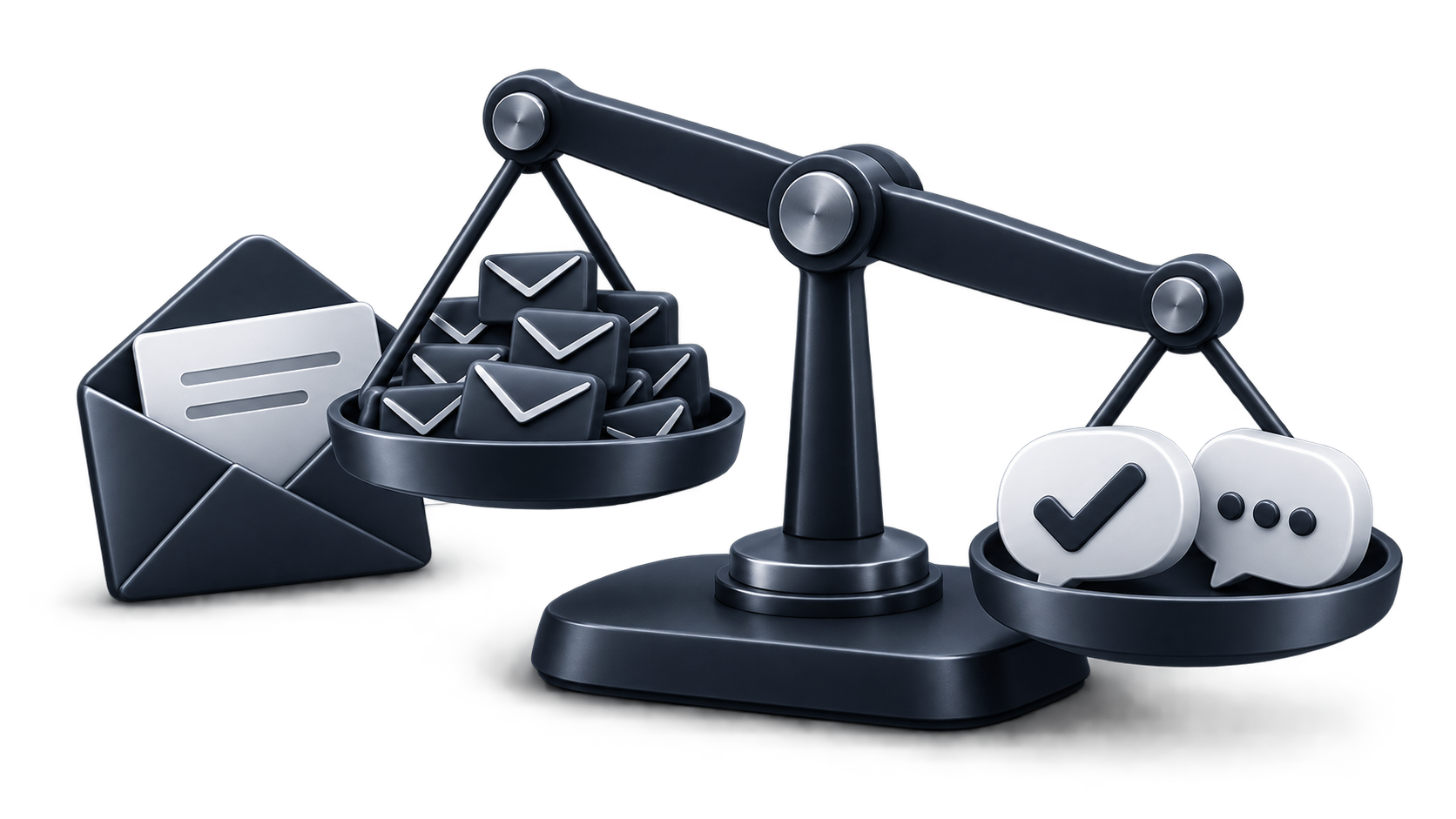
Campaign B has a lower reply rate but creates more promising sales opportunities.
That's why the quality of responses matters more than the percentage itself.
Why Some Cold Email Campaigns Get More Replies
When a campaign underperforms, the first instinct is often to rewrite the email.
Maybe the subject line isn't catchy enough. Maybe the introduction is too long.
But frequently, the bigger problem is targeting.
1. You're contacting the wrong companies
Imagine you're selling prospecting software to B2B startups.
You build a list of 500 founders at companies with fewer than 50 employees.
Sounds reasonable, right?
But those founders might include:
- Someone growing entirely through referrals.
- Someone running a B2C business.
- A founder personally spending hours finding prospects.
- A startup preparing to hire its first SDR.
All four match your company-size filter, but their needs are completely different.
The last two may have a more immediate reason to consider your solution.
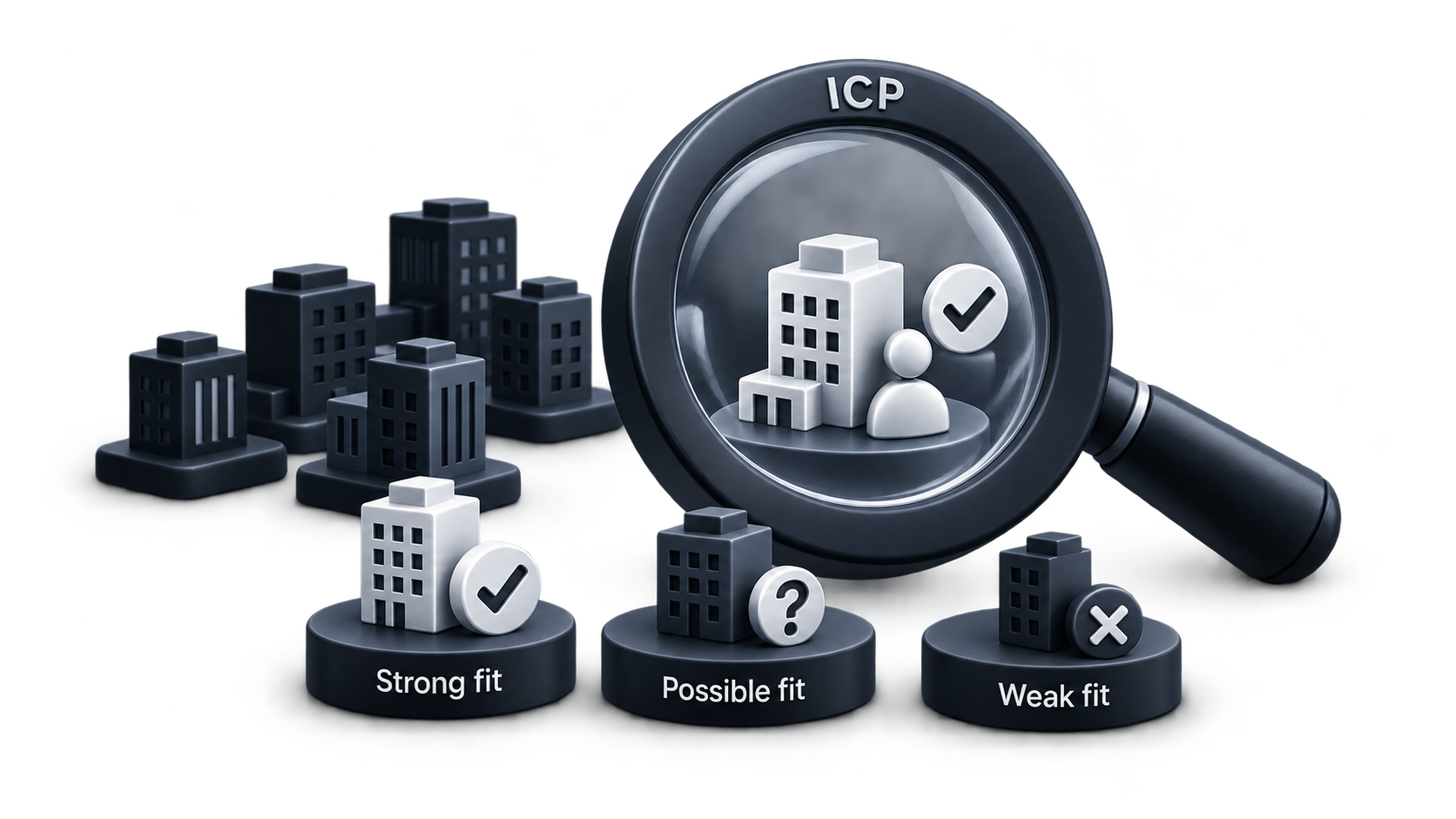
This is where a well-defined Ideal Customer Profile (ICP) becomes important.
Hunter's 2026 research found that sequences targeting 21–50 recipients averaged a 6.2% reply rate, compared with 2.4% for sequences reaching more than 500 recipients.
That doesn't prove smaller campaigns automatically perform better. But it highlights why carefully selected audiences deserve attention.
The goal isn't to reach as many people as possible. It's to reach people who have a reason to care.
For a deeper look at targeting, check out our guide on building a useful ICP for B2B outbound.
2. Your personalization isn't actually relevant
Adding someone's name and company to an email doesn't make it meaningful.
Consider this:
Hi Alex, I noticed you're the founder of ExampleTech. Your company looks really interesting!
It sounds polite, but gives Alex no compelling reason to respond.
Now compare it with:
Hi Alex, saw you're hiring your first SDR. Curious how you're handling prospect research before bringing someone onboard?
The second message connects a real business event with a potentially relevant challenge.
That's the difference between superficial personalization and contextual outreach.
Hunter's research found that sequences without personalization averaged 3.6% replies, compared with 5.6% for emails containing two personalized attributes.
But adding more personal details isn't necessarily better.
Before contacting someone, ask yourself:
- Does this company match our ICP?
- What problem might they be experiencing?
- Why might that problem matter right now?
Good personalization demonstrates relevance, not how much information you've collected about someone.
3. Your email feels like a sales presentation
Nobody wants to read six paragraphs about a product they haven't asked to see.
Yet many cold emails still start with long company introductions, feature lists, and exaggerated promises.
A better approach is to keep the first message focused on three things:
- Context: Why are you reaching out?
- Relevance: What challenge could matter to this person?
- Next step: What's one simple way to continue the conversation?
You don't need to explain your entire product.
Sometimes a thoughtful question is enough to start a conversation.
And when you're building an early-stage product, that conversation can be more valuable than an immediate demo request.
Do Follow-Ups Actually Improve Reply Rates?
Yes, follow-ups can make a meaningful difference.
A prospect might miss your first email, be busy, or simply forget to respond.
Hunter's 2026 analysis found that three-message sequences averaged a 6.8% reply rate, compared with 3.3% for single-message outreach.
Instantly's research also reported that follow-ups accounted for 42% of replies within its analyzed sequences.
These numbers suggest that stopping after one email may leave opportunities unexplored.
But following up doesn't mean sending the same pitch repeatedly.
A simple sequence might look like this:
Email 1 — Introduce the topic
Explain why you're reaching out and ask a relevant question.
Email 2 — Add context
Share another observation or explain why the problem could matter.
Email 3 — Close politely
Ask whether the topic is relevant and make it easy for the recipient to decline.
There's no universal follow-up schedule that works for every audience.
The important thing is to remain relevant and respectful.
If someone isn't interested or asks not to be contacted again, don't keep following up.
Don't Ignore Email Deliverability
Even a perfectly written email can't generate replies if it never reaches the inbox.
Email providers evaluate sender authentication, domain reputation, spam complaints, and sending patterns.
According to Google's official sender guidelines, senders need to meet specific technical requirements, with additional rules for high-volume senders.
Before scaling your outreach, check a few basics:
- Email authentication: Configure SPF, DKIM, and appropriate DMARC protection.
- Contact quality: Remove invalid or outdated email addresses.
- Sending behavior: Avoid sudden spikes in volume.
- Spam complaints: Monitor negative feedback and honor opt-out requests.
- Compliance: Follow the privacy and email outreach rules applicable to your recipients.
One more thing: don't rely too heavily on open rates.
Tracking pixels and email privacy protections can make them misleading.
A reported open doesn't necessarily mean a person actually read your message.
Prioritize genuine replies, qualified conversations, and meetings over vanity metrics.
Which Cold Email Metrics Should You Actually Track?
Reply rate is useful, but it shouldn't be your only metric.
For a small B2B team, I'd focus on four:
|
Metric |
What it tells you |
|---|---|
|
Reply rate |
How many recipients respond to your outreach |
|
Positive reply rate |
How many replies express genuine interest |
|
Meetings booked |
How many conversations turn into scheduled calls |
|
Qualified opportunities |
How many conversations involve realistic potential customers |
For example, imagine contacting 100 founders.
Eight reply, three agree to a call, and two turn out to be genuinely interested in your product.
Your reply rate is 8%.
But the more important finding is that your outreach generated two relevant opportunities.
Now you can investigate what those companies have in common and look for similar prospects.
Over time, these patterns help you improve your ICP, targeting, and messaging.
How to Improve Cold Email Results Without Sending More Emails
You don't need to send thousands of emails to start learning what works.
A focused experiment can be a better starting point.
Here's a simple approach for early-stage B2B teams:
Step 1: Choose a narrow audience.
For example, founders of B2B SaaS startups with 5–20 employees who are actively building their outbound sales process.
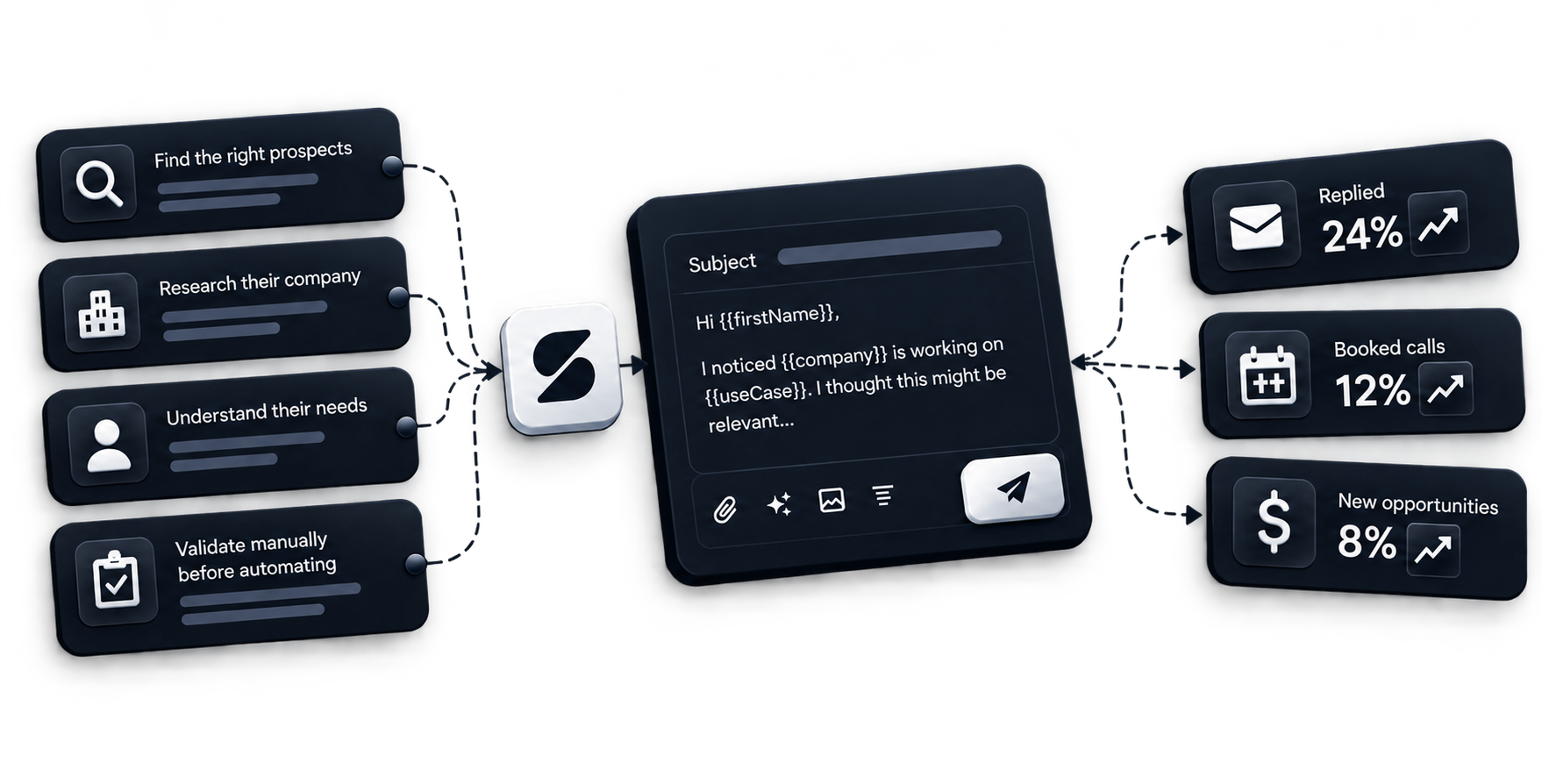
Step 2: Research 30–50 prospects.
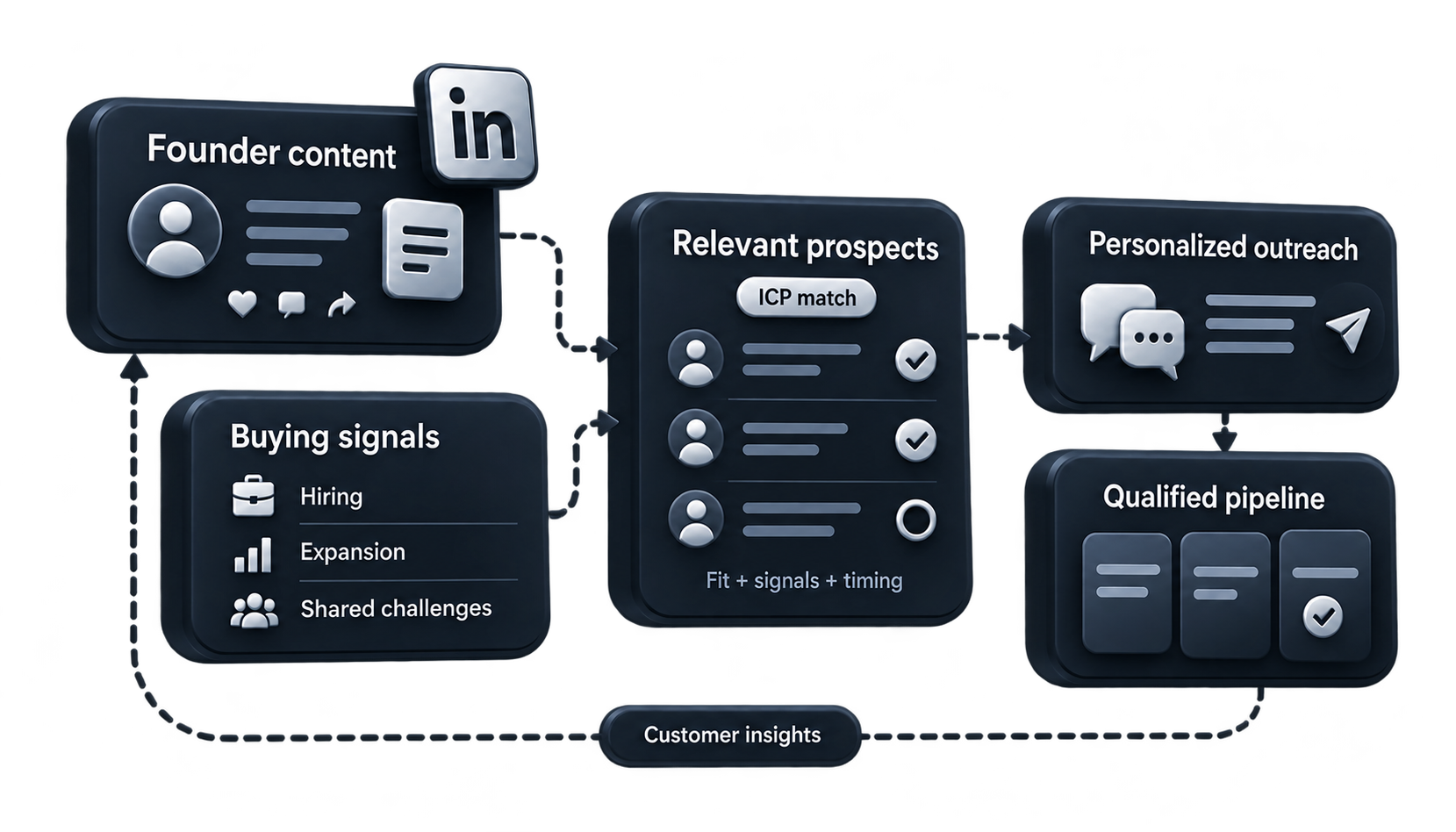
Look for relevant business events, such as entering a new market, hiring salespeople, or launching a new product.
These are clues worth investigating, not proof of buying intent.
Step 3: Write one short, relevant message.
Explain why you're contacting them and focus on a problem they might recognize.
Step 4: Follow up thoughtfully.
Give people another opportunity to respond without repeating the same pitch.
Step 5: Study the conversations.
Look beyond percentages. Which prospects responded positively? What challenges did they mention? Which conversations led to meetings?
With a small sample, avoid treating minor percentage differences as conclusive. Use the results to identify patterns and develop better hypotheses.
Once you understand what resonates, you can gradually expand your outreach.
AI-assisted prospect research can help reduce manual work, but it shouldn't replace understanding your audience.
Automating poor targeting simply helps you contact the wrong people faster.
Final Thoughts
Cold email isn't about writing the perfect subject line or hitting a magical reply rate.
Recent benchmarks suggest that low-single-digit response rates are common, but the numbers vary significantly across campaigns.
The biggest improvements often begin before you send anything.
Define a more specific ICP. Look for relevant buying signals. Understand why someone might need your solution now. Write messages that start conversations rather than immediately pushing for sales.
And most importantly, measure what happens after someone replies.
Because successful B2B outbound isn't about getting everyone to respond. It's about reaching the right people and giving them a good reason to talk.